

.svg)

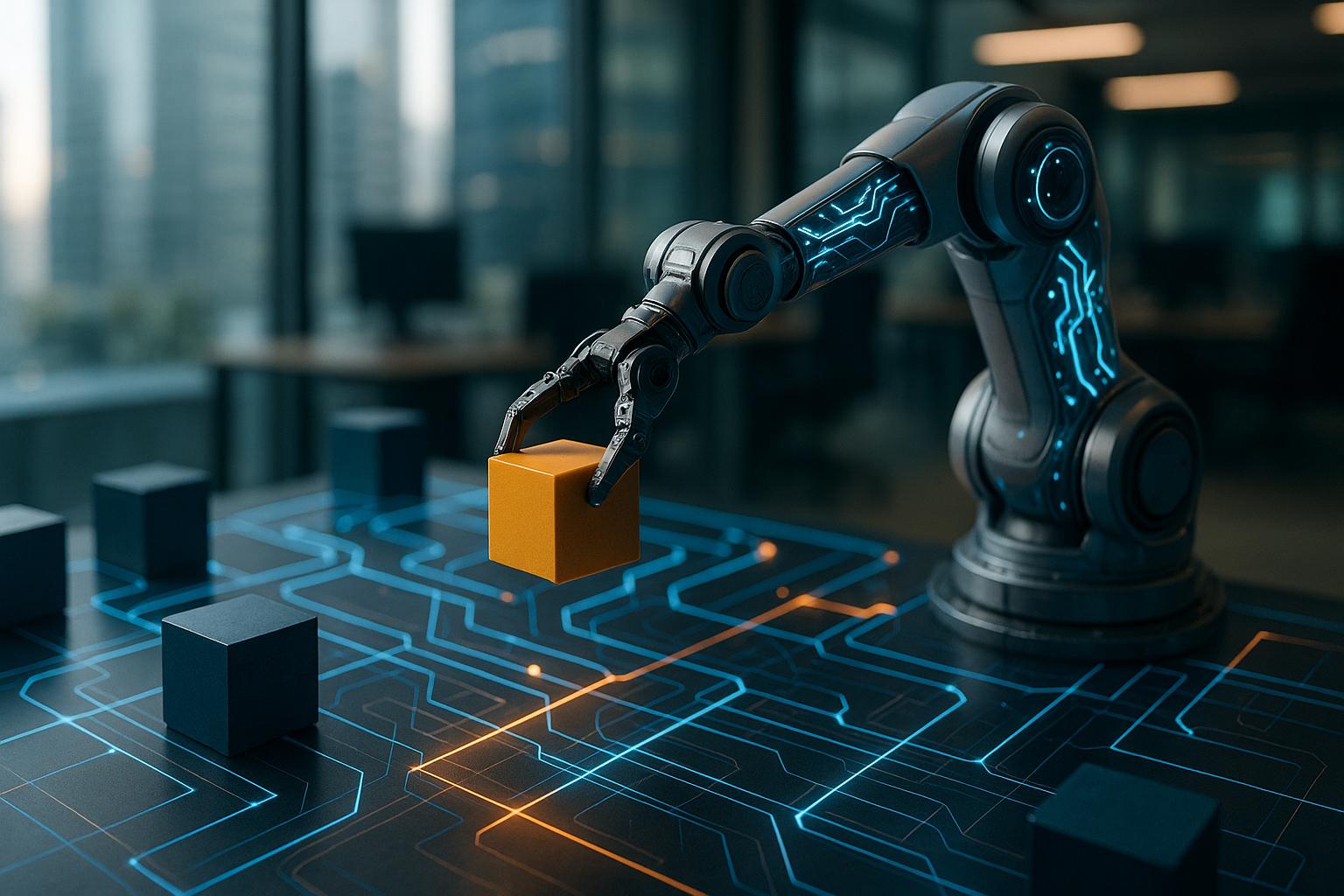
Imagine a product development environment where your team doesn't just create, but co-creates with an intelligent AI assistant. While once a futuristic concept, AI-powered co-pilots are increasingly becoming a reality. Recent advancements in artificial intelligence, exemplified by ongoing research from institutions like MIT in the field of AI-assisted Computer-Aided Design (CAD), signal a significant shift. This innovation isn't merely about faster drafting; it represents a powerful catalyst for fundamentally transforming your entire product development lifecycle and accelerating your path to market.
For innovation leaders, product owners, and CTOs at growth-stage technology companies, these developments mark a pivotal transition from theoretical AI potential to practical, measurable impact on your product roadmap.
Understanding the AI Co-Pilot: More Than Just an Assistant
At its core, an AI co-pilot, similar to those being pioneered in various research labs and commercial applications, is designed to augment human expertise, not replace it. In a CAD environment, for instance, an AI co-pilot empowers designers to:
Rapidly iterate on ideas.
Suggest optimized structures and materials.
Proactively identify potential design errors or manufacturing constraints.
Even generate novel design concepts based on specified parameters and performance criteria.
The result is a tangible increase in efficiency, fewer bottlenecks, and more dedicated time for genuine innovation and strategic problem-solving.
Now, project this "co-pilot" concept across your entire organization. Visualize AI assisting your engineering teams in writing cleaner, more efficient code; empowering your marketing department to craft hyper-targeted campaigns; or guiding your operations team in optimizing complex workflows. This isn't just a vision for the distant future; it's an immediate opportunity for lean, agile teams to leverage AI and achieve enterprise-level impact.
Driving Tangible Business Impact: Efficiency, Innovation, and ROI
For SaaS, digital product, and AI-driven companies grappling with limited internal AI expertise or stalled pilot projects, the implications of this co-pilot model are profound and measurable:
Accelerated Time-to-Market: AI can streamline and automate routine or complex tasks, potentially reducing development cycles that once consumed days to mere hours. This enables faster product launches and quicker adaptation to market demands.
Enhanced Innovation Capacity: By offloading repetitive and time-consuming tasks to AI, your high-value teams are freed to focus on strategic thinking, creative problem-solving, and developing groundbreaking solutions that truly differentiate your offerings.
Reduced Costs & Error Mitigation: AI's analytical capabilities allow it to identify potential issues early in the design and development process. Catching errors upstream saves significant rework costs and refines operational processes before they escalate into expensive problems.
Validated AI Use Cases: Concrete examples, such as AI CAD co-pilots, provide a clear, practical framework. This helps organizations move beyond abstract ideas to identify, validate, and prioritize AI use cases specifically tailored to their business, ensuring actionable projects with measurable outcomes.
From Stalled Pilots to Measurable Outcomes with iForAI
Many organizations recognize AI's transformative potential but face challenges in scaling beyond fragmented experimentation or pilots that never fully integrate. The critical hurdle lies in bridging the gap between cutting-edge AI research and practical, ROI-driven implementation that delivers real business results. This is precisely where iForAI provides specialized expertise.
At iForAI, we help mid-market and enterprise organizations navigate this critical divide. We move beyond strategic recommendations to provide hands-on, secure integration of AI directly into your existing cloud infrastructure, data pipelines, and workflows. Whether developing intelligent agents, empowering your teams through targeted workshops, or rapidly piloting bespoke AI solutions, our mission is to transform high-level AI concepts into working systems that generate measurable business impact and return on investment.
The advancements in AI co-pilots, like those from MIT in CAD, serve as a compelling reminder that the future of work is inherently collaborative a powerful synergy between human ingenuity and intelligent machines. The pivotal question for today's leaders isn't if AI will transform your business, but how swiftly and effectively you can harness its power to achieve your strategic objectives. Partner with us to make that transformation a reality.